🌍 Introduction
Going on safari in Southern Africa is one of the most exciting travel experiences you can have. Whether you visit Kruger National Park in South Africa, the Hlane, Mkhaya or Mlilwane reserves in Eswatini, or the protected areas of southern Mozambique, the experience immerses you in a unique natural environment where wildlife always comes first. To truly enjoy the journey, however, it is essential to know what to pack, what to avoid and how to prepare luggage that is practical, light and suited to the climate and safari activities.
This guide is designed especially for travellers departing from Maputo for a safari in Kruger National Park, 👉 Kruger Safari from Maputo: Complete 2026 Guide, from Nelspruit (KMIA/MQP Airport) or from areas close to the borders, whether for a multi-day Kruger safari from Maputo or a well-organised short break. Every point below is based on our team's experience of hundreds of guided trips.
This is not a generic guide:
✔️ it is entirely practical,
✔️ it is updated for 2026,
✔️ it includes genuine recommendations from safari guides,
✔️ and it is tailored to conditions in Southern Africa, which differ from those in destinations such as Kenya or Tanzania.
You may also find this useful: Depending on the trip you are planning, you can start with tours to Kruger, safaris from Maputo and Southern Africa tours.
Let's go through it step by step.
🎒 1. Suitable safari clothing
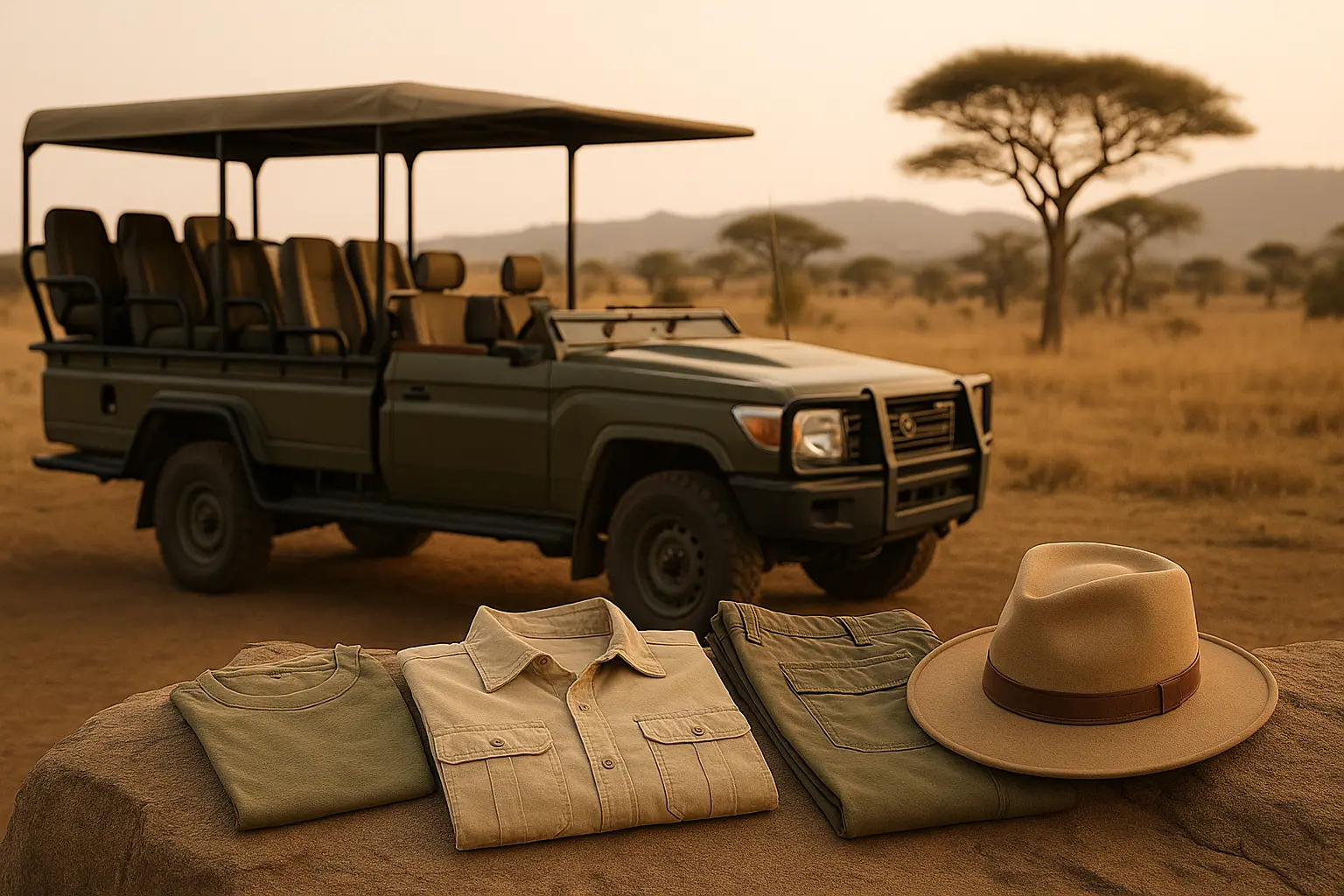
The ideal clothing for a safari in Kruger National Park.
Clothing is one of the most common mistakes. Many travellers arrive with black T-shirts, bright colours or unsuitable fabrics that do not work well in strong sun, dust, wind and, at times, mosquitoes.
🌿 Recommended colours (very important)
Earth tones help you blend into the surroundings and do not attract insects:
- 🟤 Beige
- 🟢 Olive green
- 🟠 Khaki
- 🟫 Brown
❌ Colours to avoid
- ⚪ White → gets dirty in seconds.
- ⚫ Black → absorbs heat, attracts mosquitoes and increases perspiration.
- 🔴 Bright colours → make it impossible to blend in.
The amount of clothing you need will also depend on the length of the trip, as a short outing is not the same as a 3-day Kruger safari from Maputo with several daily activities.
👕 Recommended clothing for 3–5 days
- 👚 2–3 lightweight short-sleeved T-shirts.
- 👕 1 long-sleeved shirt (excellent protection against mosquitoes).
- 👖 1 pair of lightweight trekking trousers.
- 🩳 Shorts (only when there are few mosquitoes).
- 🧥 A light jacket or sweatshirt for cold mornings.
- 🌧️ An ultra-light raincoat or compact poncho.
- 🧣 A buff or neck scarf (protects you from wind, dust and the morning chill).
- 🧢 A cap or sun hat.
💡 Practical advice from our guides
- Always take an extra layer at dawn: safaris usually begin between 4:30 and 5:30.
- Avoid thick fabrics: breathability is key.
- There is no need to dress like a ranger or wear military-style clothing; it is illegal in some countries.
👟 2. Recommended footwear
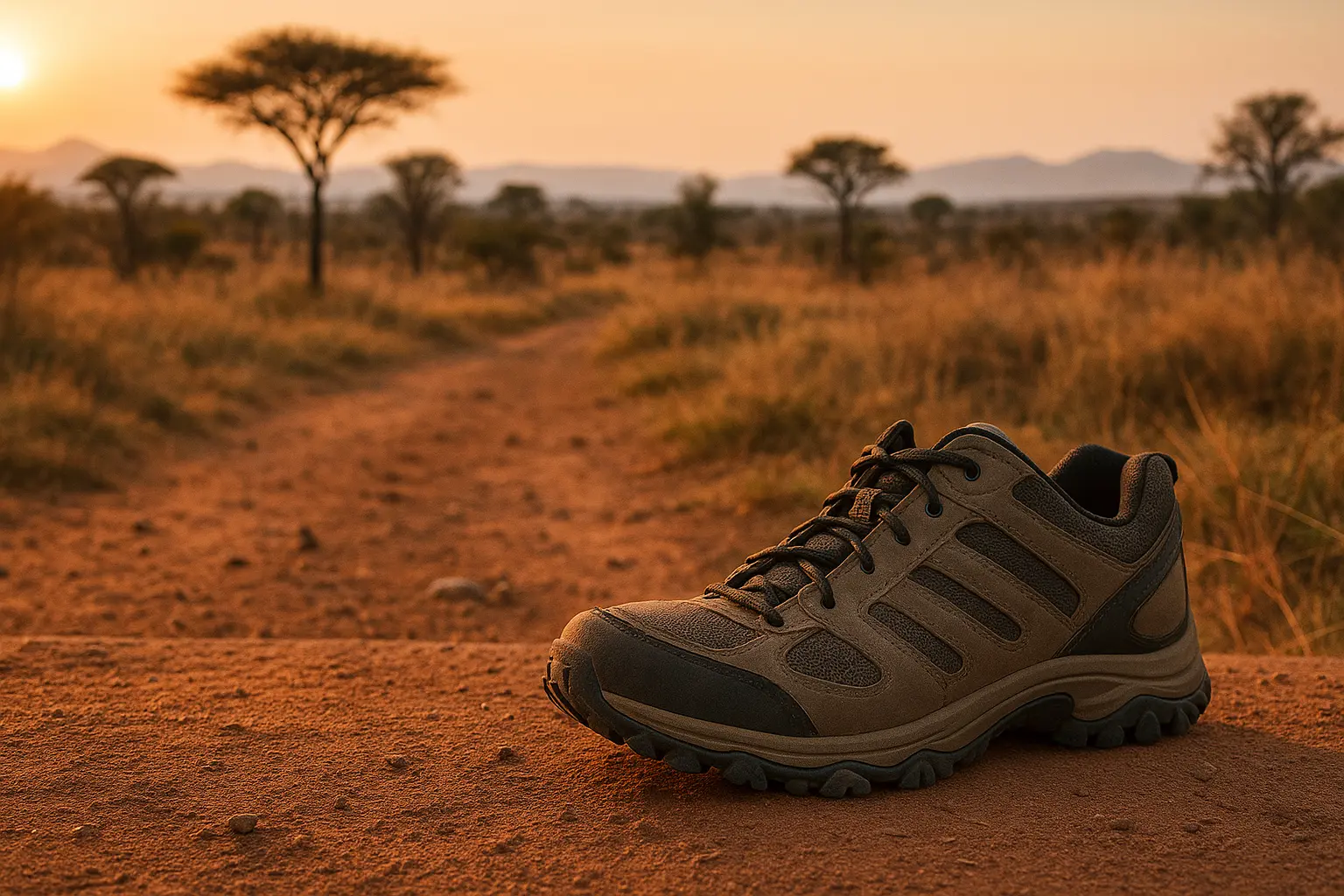
Recommended footwear for an African safari
Footwear should be comfortable, non-slip and suitable for walking on dirt, gravel or slightly wet ground.
- 👟 Trail shoes → the best option for getting in and out of the 4×4.
- 🩴 Closed-toe sandals → perfect for walking around the lodge or outdoor areas.
- 🥾 Boots → only if you are going on a walking safari or long hike.
💡 Do not wear new shoes for the first time on safari. Friction from dust and heat can quickly cause blisters.
☀️ 3. Sun protection and repellent
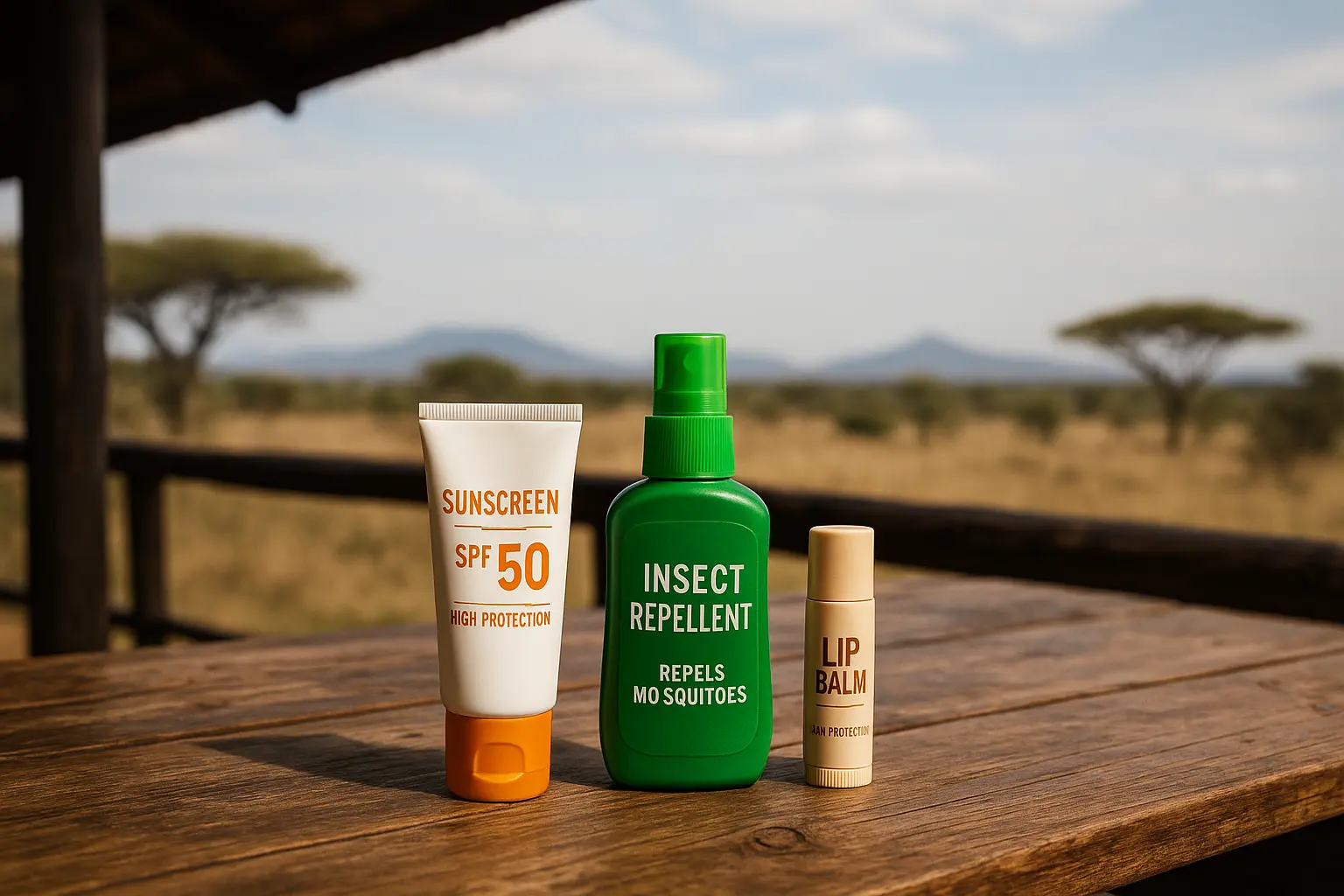
Sun protection and insect repellent for a safari.
The sun in Kruger, Eswatini and Mozambique is much stronger than in Europe, even in winter.
Essentials:
- ☀️ Water-resistant SPF 50 sunscreen.
- 🦟 Repellent with 30–50% DEET or icaridin.
- 💄 Lip balm with UV protection.
- 🧴 After-sun lotion or cooling cream.
- 🧻 Wet wipes for dust, perspiration or cleaning your hands.
💡 During the rainy season (Nov–April), always keep repellent with you.
📸 4. Recommended photography equipment
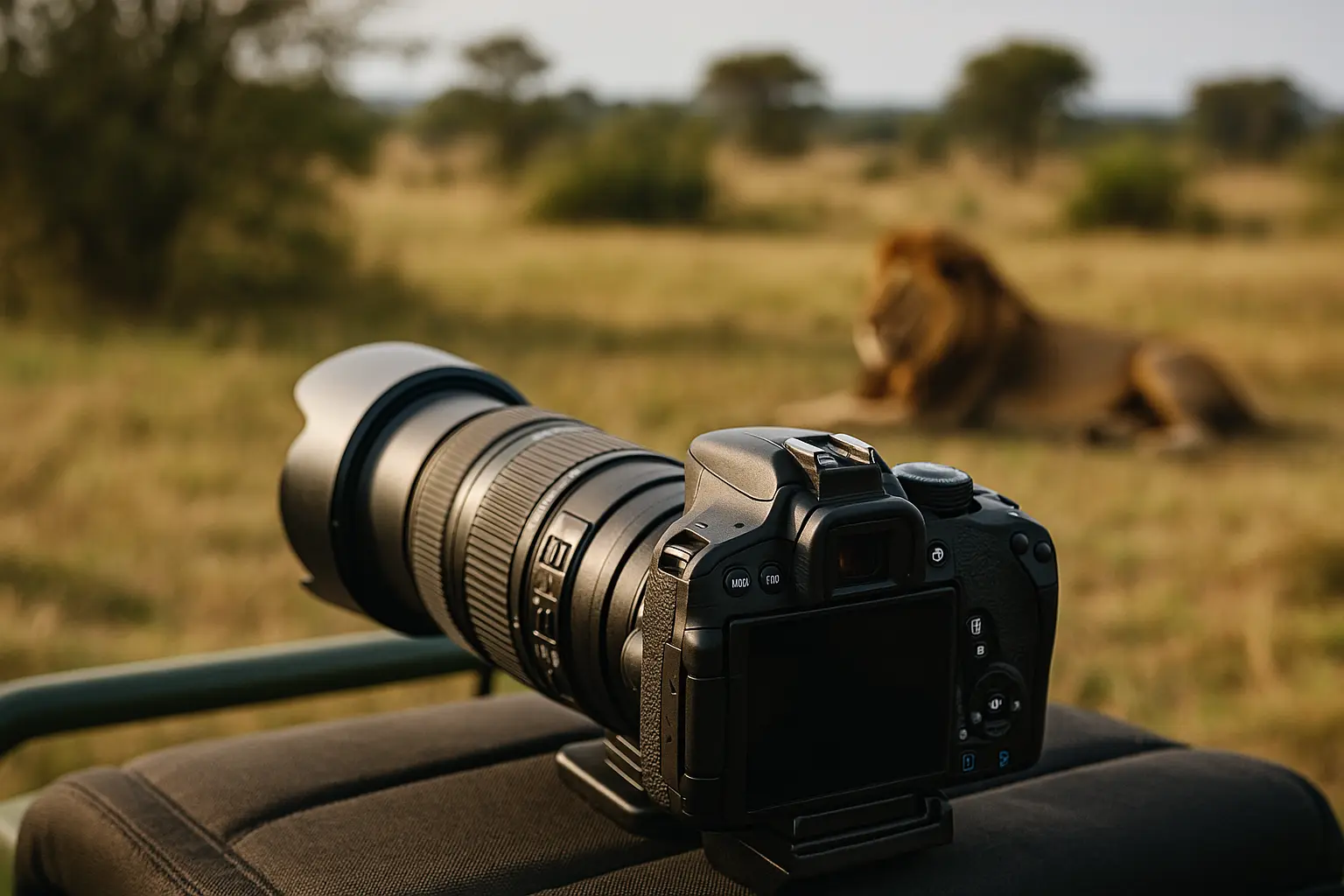
Camera with a telephoto lens for wildlife photography.
If you enjoy photography, a safari is a dream, especially a photographic safari in Kruger, where wildlife appears at different distances and in constantly changing light. But it is easy to run out of battery power, memory or sufficient zoom.
Recommended equipment:
- 📸 Camera with a 200–300 mm zoom lens.
- 💾 2 or 3 memory cards (at least 64 GB).
- 🔋 Power bank + spare batteries.
- 🔭 Binoculars (essential for watching birds and distant wildlife).
💡 Many animals appear farther away than you might imagine, so a powerful zoom makes all the difference.
💊 5. Basic first-aid kit
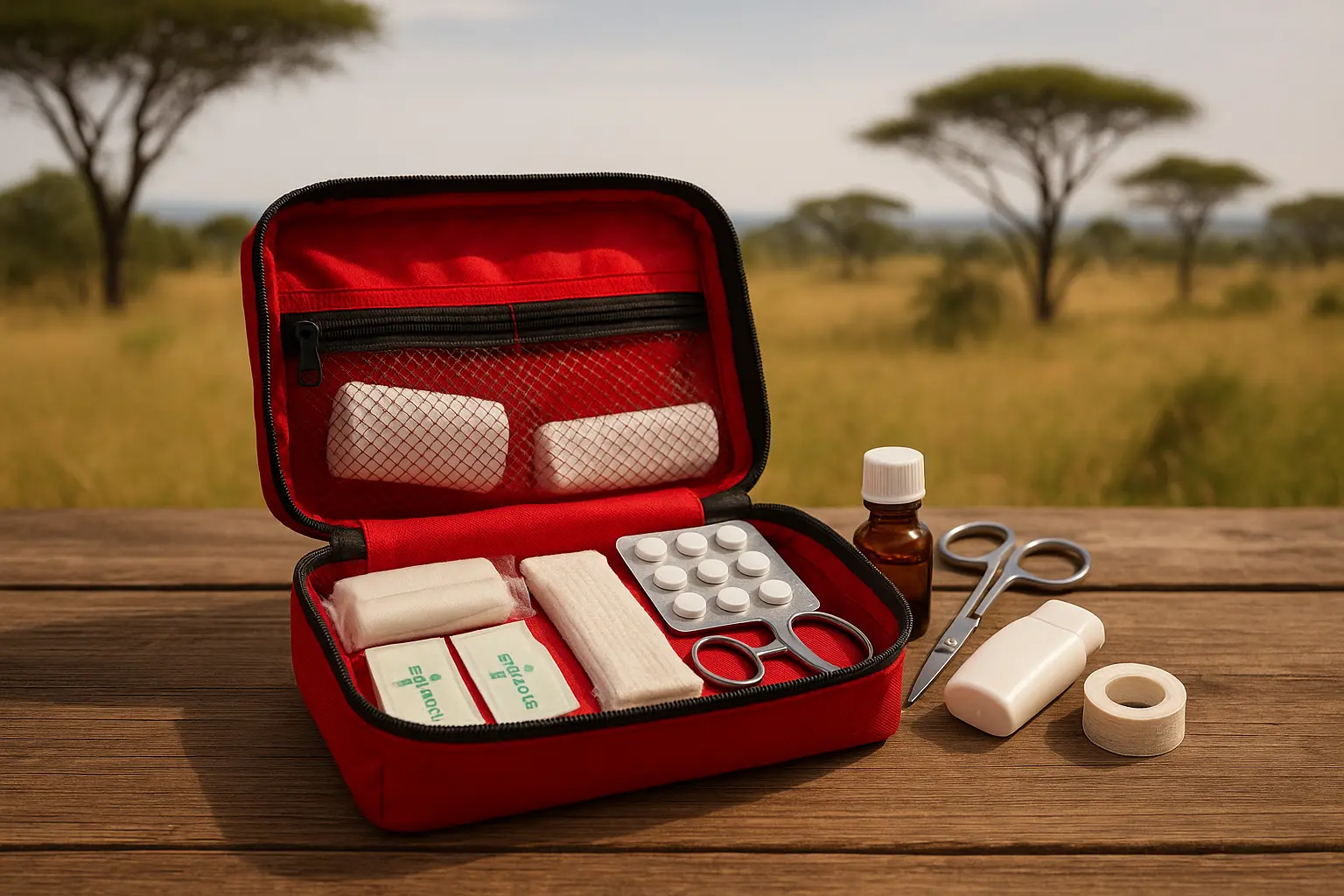
Recommended first-aid kit for an African safari.
Your first-aid kit should not take up much space, but it should be comprehensive:
- 💊 Painkillers.
- 🤧 Antihistamines.
- 💦 Oral rehydration salts (very useful on hot days).
- 🩹 Plasters and gauze.
- 🧪 Disinfectant.
- 🧴 Insect-bite gel.
- 📄 Personal medication + prescription.
💡 There are no pharmacies in remote areas of Kruger. Bring everything you need from Maputo.
📄 6. Documents and money
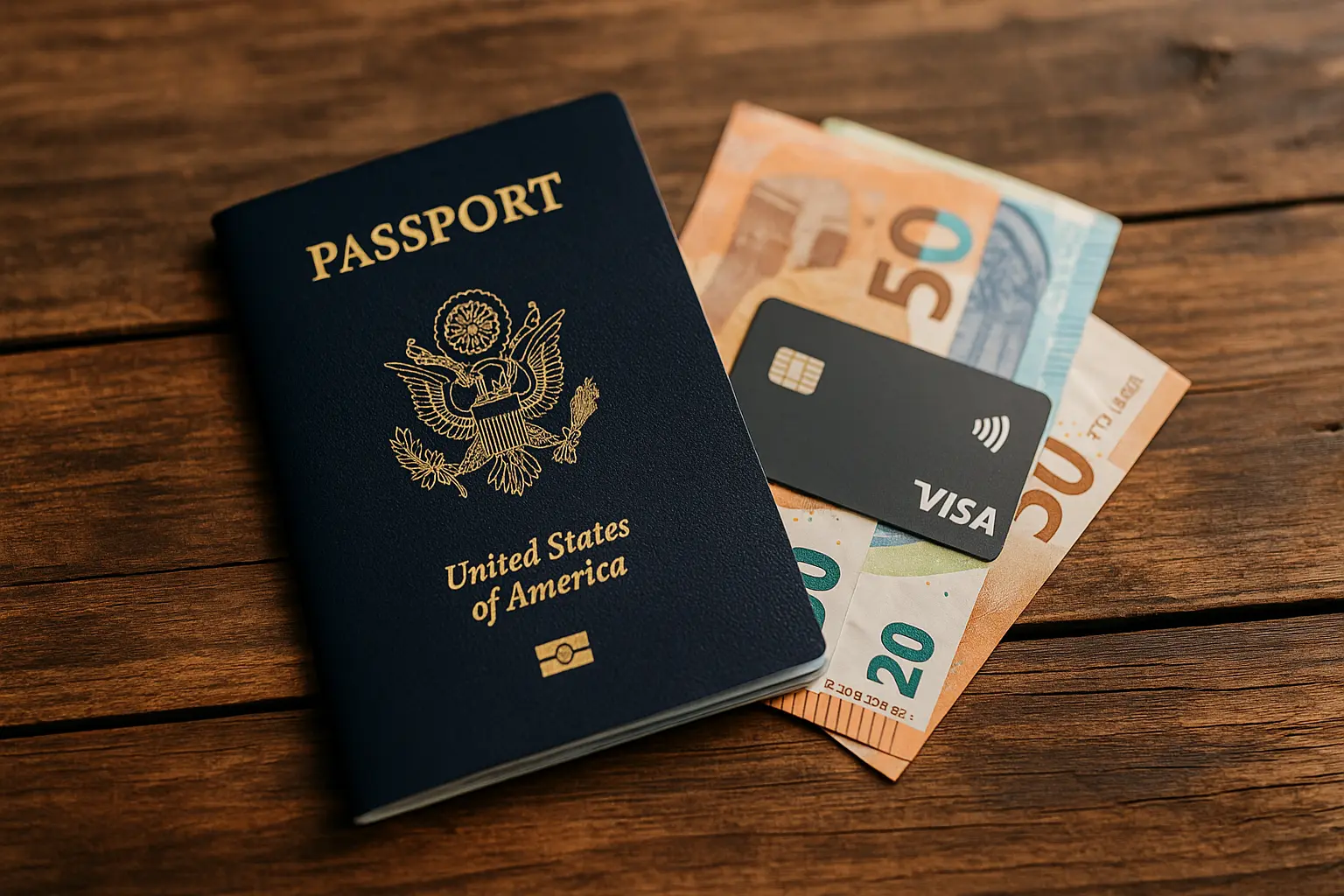
Documents required to travel to Kruger from Maputo.
These documents are essential for crossing the border and going on any safari:
travellers entering Kruger from Nelspruit (KMIA/MQP Airport)
- 📘 A valid passport in good condition.
- 🛂 Visa (if required for your nationality).
- 💵 Cash (rand / euros / meticais).
- 💳 Visa or Mastercard cards.
- 🛡️ Travel insurance: cover for accidents, cancellations and medical emergencies.
If you prefer to avoid unexpected issues at border crossings, with schedules and with park access, organised trips to Kruger from Maputo make the entire process much easier
💡 Access through Lebombo/Komatipoort is quicker when you carry cash for small purchases, tolls or snacks.
🔌 7. Electronics and adaptors
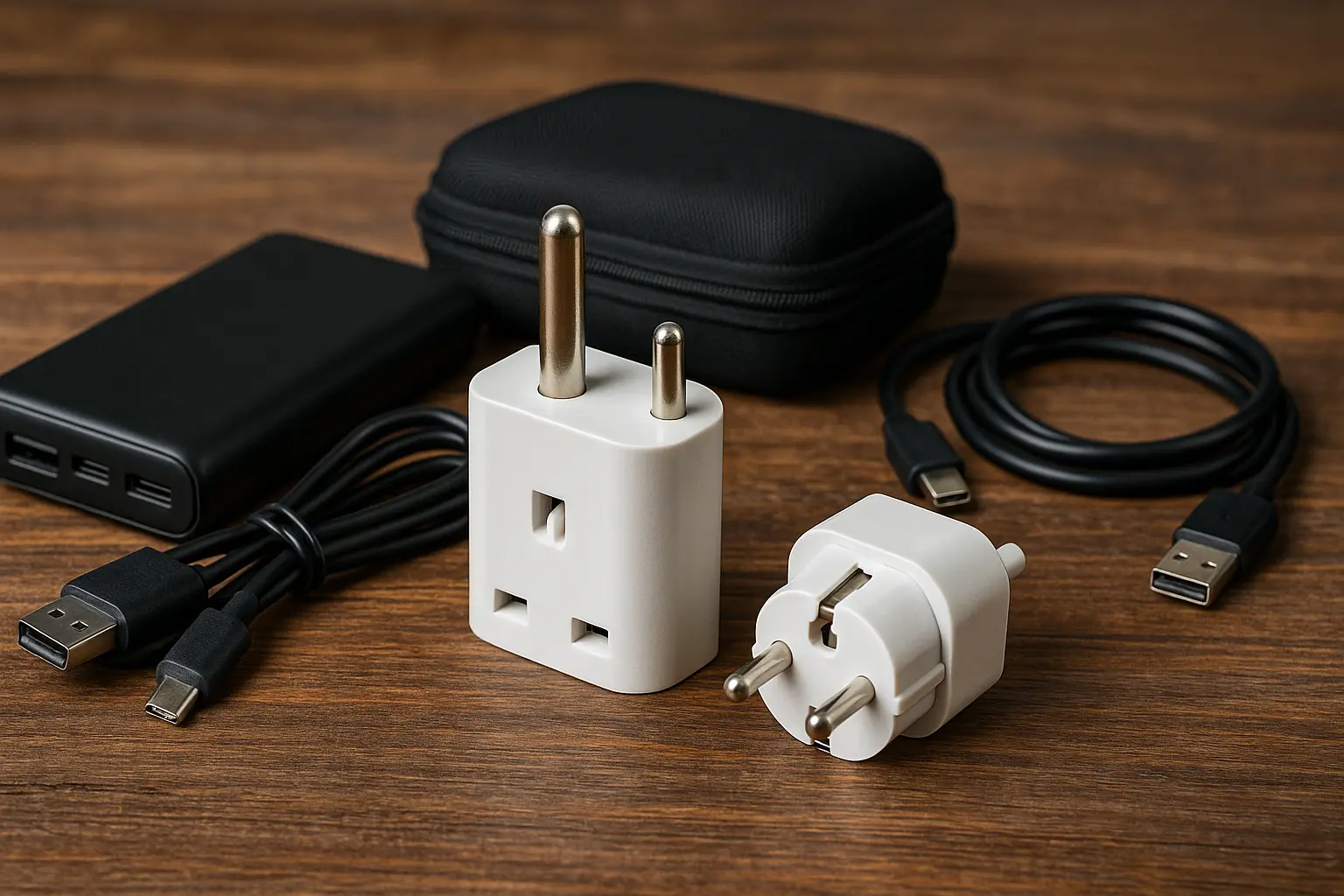
Electrical adaptors for South Africa, Mozambique and Eswatini.
Plug types vary by country. Accommodation usually provides adaptors for international guests.
- 🔌 Type M → South Africa
- 🔌 Type C/F → Mozambique and Eswatini
- 🔋 10,000–20,000 mAh power bank
- 📱 Spare cables
- 📦 Dustproof phone case
🧴 8. Hygiene and comfort
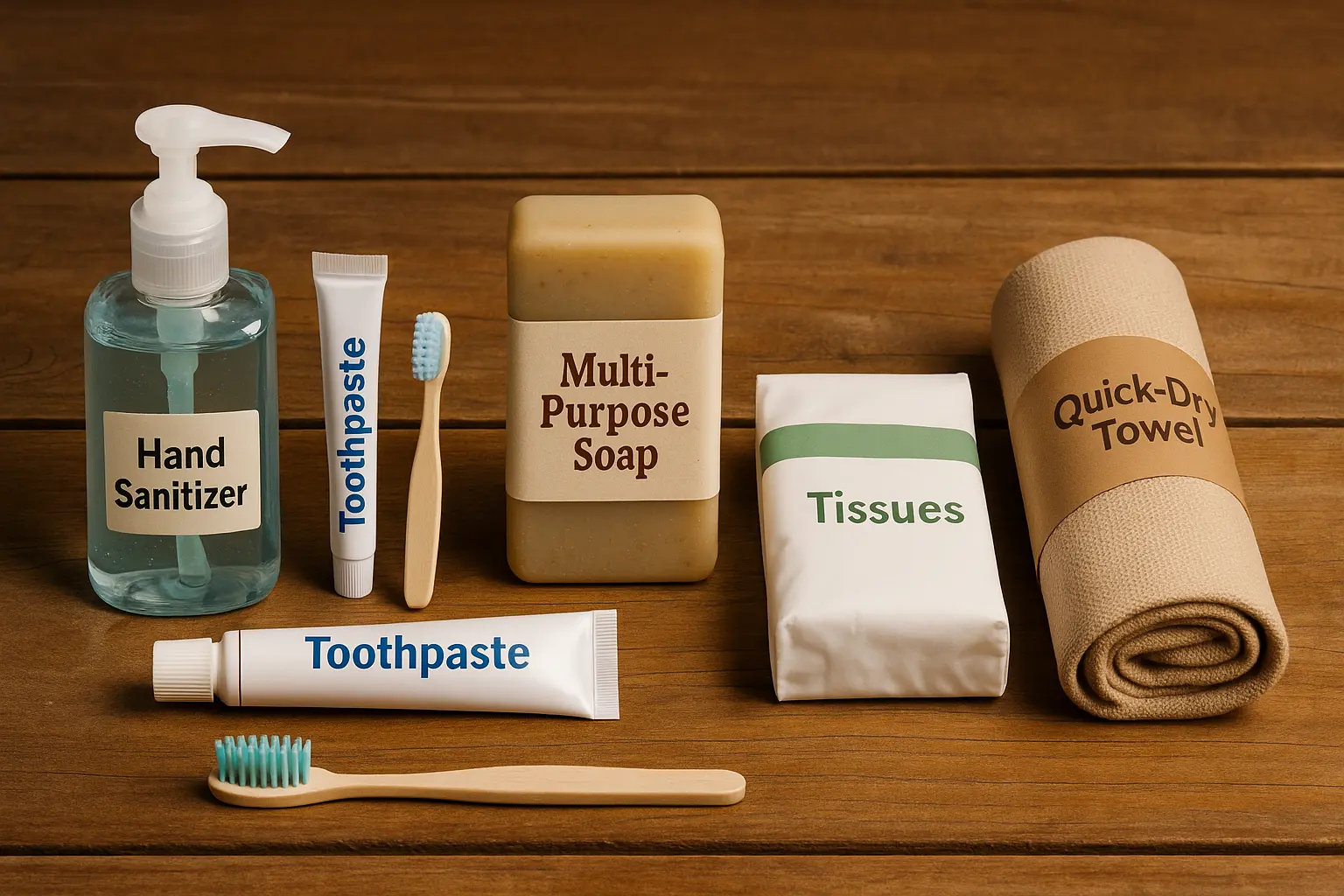
Recommended hygiene kit for a safari.
- 🧴 Hand sanitiser.
- 🪥 Toothbrush + toothpaste.
- 🧻 Tissues.
- 🧼 Biodegradable soap.
- 🧺 Quick-drying towel.
- 🧴 Refreshing facial wipes.
💡 Many lodges do not provide a full range of toiletries. Bring your essentials.
🌡️ 9. Dry season vs wet season
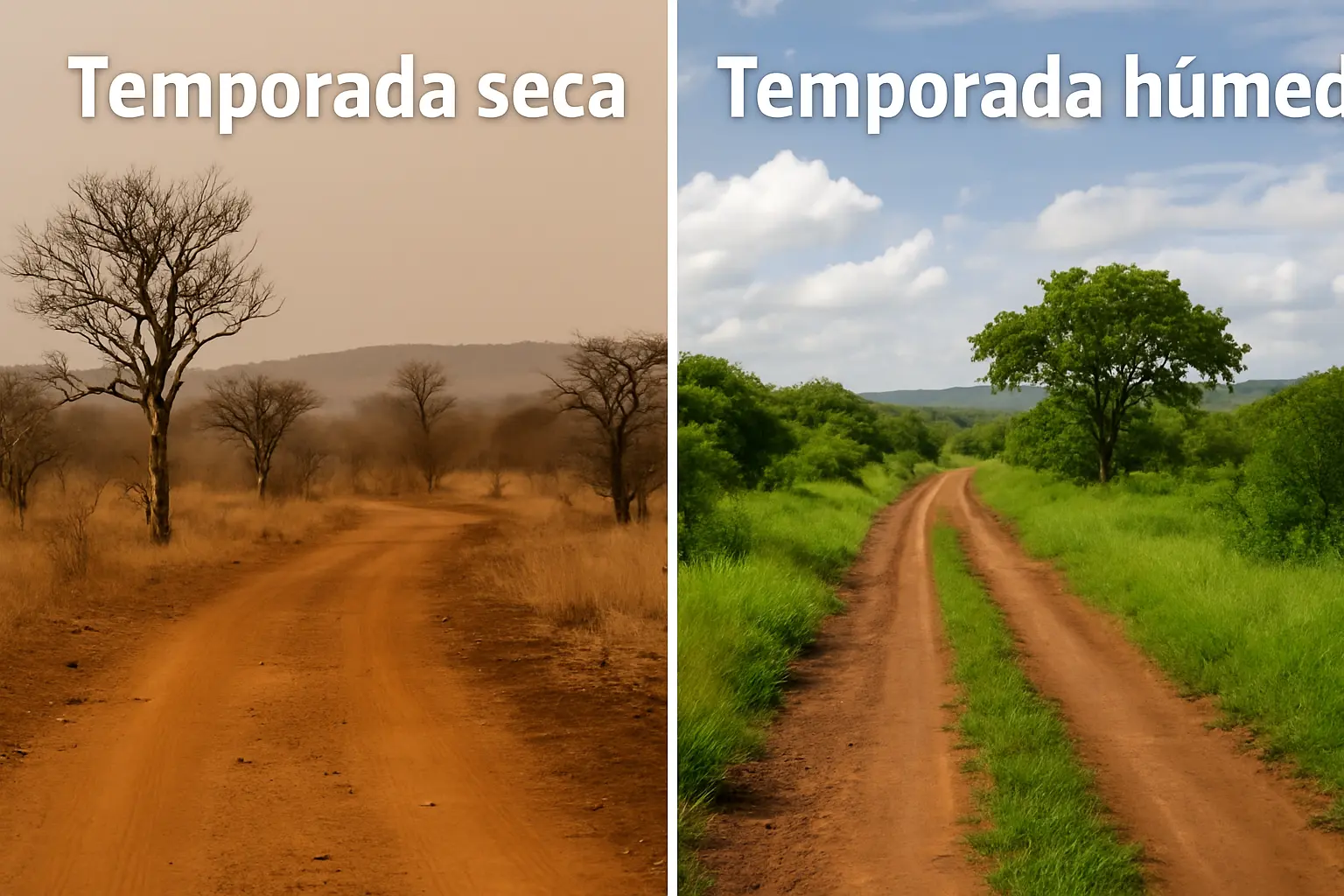
Dry season vs wet season in Kruger.
The weather shapes much of your safari experience.
Choosing the best time for a safari in Southern Africa
❄️ Dry season (May–October)
Advantages:
- 🦁 Better wildlife visibility (low vegetation).
- ☀️ Clear skies and settled weather.
- 🦟 Almost no mosquitoes.
Disadvantages:
- 🌫️ A great deal of dust on the roads.
- ❄️ Cold mornings in the 4×4.
🌧️ Wet season (Nov–April)
Advantages:
- 🌿 Green, photogenic landscapes.
- 🐾 Birthing season for many mammals.
- 🧳 Fewer tourists.
Disadvantages:
- 🌦️ Frequent rain.
- 🦟 More mosquitoes.
💼 10. The ideal type of luggage
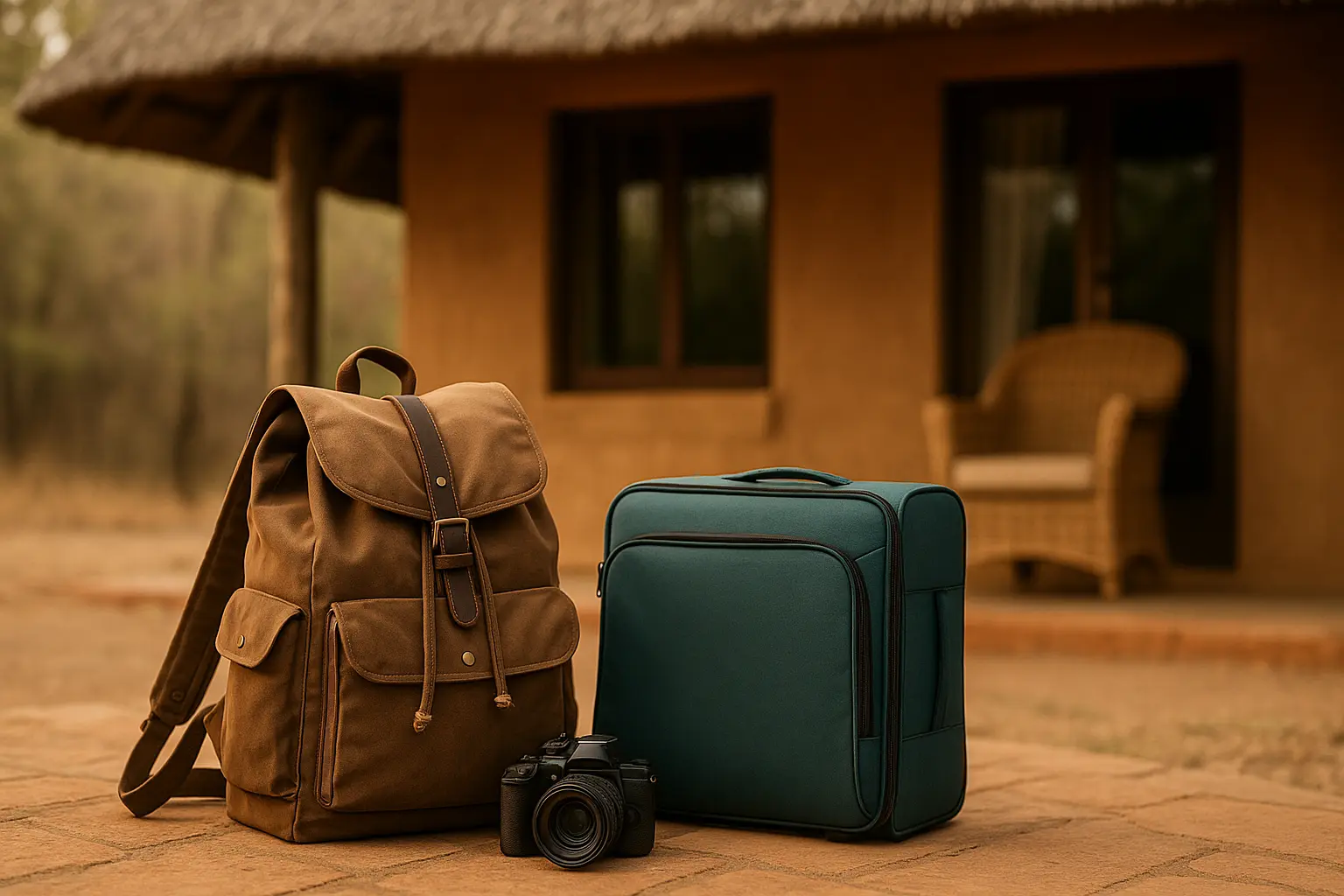
The best luggage for a safari.
- 🎒 Daypack (20–30 L).
- 🧳 Soft-sided bag (ideal for dirt roads).
- ❌ Avoid hard-shell suitcases → they do not fit well in 4×4 vehicles.
📝 11. Extra tips from our guides (very useful)
✔️ Do not wear perfume
It attracts insects and disturbs wildlife.
✔️ Avoid military or camouflage clothing
It is illegal in some countries.
✔️ Drink more water than you think you need
Sun and wind dehydrate you quickly.
✔️ Keep everything in zip-lock bags
Dust + electronics = a bad combination.
✔️ Always carry a small torch
Many lodges have poorly lit paths.
✔️ Do not put your arms or hands outside the 4×4
Animals can appear nearby without warning.
📝 12. Quick mini-checklist
- 🟫 Earth-toned clothing
- 🧢 Hat
- ☀️ Sunscreen
- 🦟 Insect repellent
- 📸 Camera + batteries
- 🧥 Light jacket
- 💊 Personal medication
- 💧 Reusable bottle
- 📘 Passport
- 🔋 Power bank
🔦 13. Torches and lodge safety
At many lodges and camps inside reserves such as Kruger, Hlane or Mkhaya, lighting is limited to protect nocturnal wildlife. A small torch is therefore essential for moving around safely at night.
Recommendations:
• 🔦 Head torch → keeps your hands free.
• 🔋 Bring spare batteries or a USB charger.
• 🚶♂️ Walk only in designated areas.
• 🐾 Do not approach animals, even if they appear calm.
💡 Low lighting is not a fault: it is a conservation and safety measure.
💳 14. Payments, cash machines and cards in the parks
Although you can pay by card inside Kruger National Park and at most reserves in Southern Africa, not every payment point has a stable connection. Carrying both a card and cash is recommended.
Useful tips:
• 💳 Visa and Mastercard are the most widely accepted.
• 🧾 Keep your receipts; some machines fail because of wind or dust.
• 💵 Carry cash in rand (ZAR) for small purchases.
• 📱 Avoid relying on mobile payments: the network is unreliable.
💡 Carrying two payment methods prevents problems when paying for admission, fuel or snacks inside the park.
🧃 15. Recommended drinks and snacks for your safari
Most rest areas in Kruger and reserves in Eswatini have quick food options during peak hours, but it is always useful to carry simple foods that will not melt or attract insects.
Recommended:
• 🧃 Reusable bottle + cold water.
• 🥜 Nuts or seed mix.
• 🍏 Apple or pear (they withstand the heat).
• 🥪 Cold sandwich in a sealed bag.
• 💧 Oral rehydration salts in very hot weather.
⚠️ Do not eat while the vehicle is moving. Eating is only permitted in designated areas.
🏨 16. Booking accommodation to suit your safari
The location of your accommodation affects access times and the likelihood of sightings. Staying a few kilometres from the park is not the same as staying near the gates or inside it.
Recommended options by travel style:
• 🛌 Families: accommodation near Hazyview or Malelane (easy access).
• 🦁 Wildlife enthusiasts: stay near the entrance gates or inside the park (Skukuza, Satara, Berg-en-Dal).
• 📸 Photography: areas near rivers or viewpoints.
• 💎 Luxury: private lodges with their own safari vehicles.
💡 Choosing according to the access gate + safari schedule improves the entire experience.
❓ 17. Frequently asked questions
❓ What clothing is best for a safari in Kruger?
👉 Lightweight clothing, earth tones and a jacket for dawn.
❓ Is it cold in the morning?
👉 Yes, especially between June and August.
❓ Do I need boots?
👉 Only for guided walks.
❓ Can I bring a hard-shell suitcase?
👉 You can, but it is not recommended.
❓ Is insect repellent necessary?
👉 Yes, even in winter.
❓ Should I bring a torch?
👉 Yes, especially at more rustic lodges.
❓ Are there mosquitoes inside Kruger?
👉 Yes, especially at dusk and in wet areas.
❓ Can I wash clothes at the lodge?
👉 Most offer a laundry service (at an additional cost).
❓ Do European plugs work?
👉 Yes in Mozambique and Eswatini; in South Africa you need a Type M adaptor.
📢CTA
🦁 Ready for your adventure?
🌍 Discover our Kruger Safaris from Maputo and Safaris from Nelspruit (KMIA/MQP).
✨ We organise your entire journey with safety, comfort and expert guides.