🦁 Animals of Kruger National Park: Africa's Greatest Wildlife Spectacle
🌍 Kruger National Park is one of the world's most famous nature reserves and one of the best places on the planet to see wildlife roaming free.
👉 It is managed by SANParks, South Africa's official national parks organisation, where you can find up-to-date information about the park.
📍 Located in north-eastern South Africa, this vast national park protects nearly 20,000 km² of African ecosystem, an immense expanse of savannah where hundreds of animal species live side by side.
You may also find this useful: To spend more time looking for wildlife, explore a three-day Kruger safari, a four-day safari with more game drives and all our Kruger tours.
🦁 To plan your trip, read our 👉 complete guide to a Kruger National Park safari from Maputo
🦁 The animals of Kruger National Park make this destination one of Africa's most complete and spectacular safari experiences.
🐘 On a Kruger safari, you may see:
🦁 large African predators
🐘 huge savannah herbivores
🦓 herds of animals roaming free
🐆 elusive big cats
🦅 spectacular birds
📊 In total, the park is home to:
• more than 140 mammal species
• more than 500 bird species
• more than 100 reptile species
🌿 This extraordinary biodiversity makes Kruger one of the world's best destinations for a photographic safari in Africa.
👀 Many first-time visitors are surprised by how readily wildlife can be seen during safaris in the park.
⚠️ Kruger's riches, however, extend far beyond its most famous animals. The park has a complex ecosystem that supports everything from large predators to small species essential to its natural balance.
🌅 Every day in the park brings different experiences and remarkable encounters with African wildlife.
🦁 Kruger National Park's Big Five: The Most Sought-After Animals on Safari
🐾 When people think of the animals in Kruger National Park, most travellers immediately picture the famous Big Five.
📖 The term Big Five originated in the era of traditional hunting safaris and referred to the five animals considered most difficult to hunt on foot.
🌍 Today, the term has taken on a new meaning and represents the most iconic animals on any African safari.
🐘 Which Animals Make Up the Big Five?
🦁 Lion
🐘 African elephant
🐆 Leopard
🦏 Rhinoceros
🐃 African buffalo
🎯 Seeing all five animals on a Kruger National Park safari is a major goal for many travellers.
📈 Although you may not see them all in a single day, a multi-day safari considerably improves your chances of finding them in their natural habitat.
🦁 African Lion: Kruger National Park's Most Iconic Predator
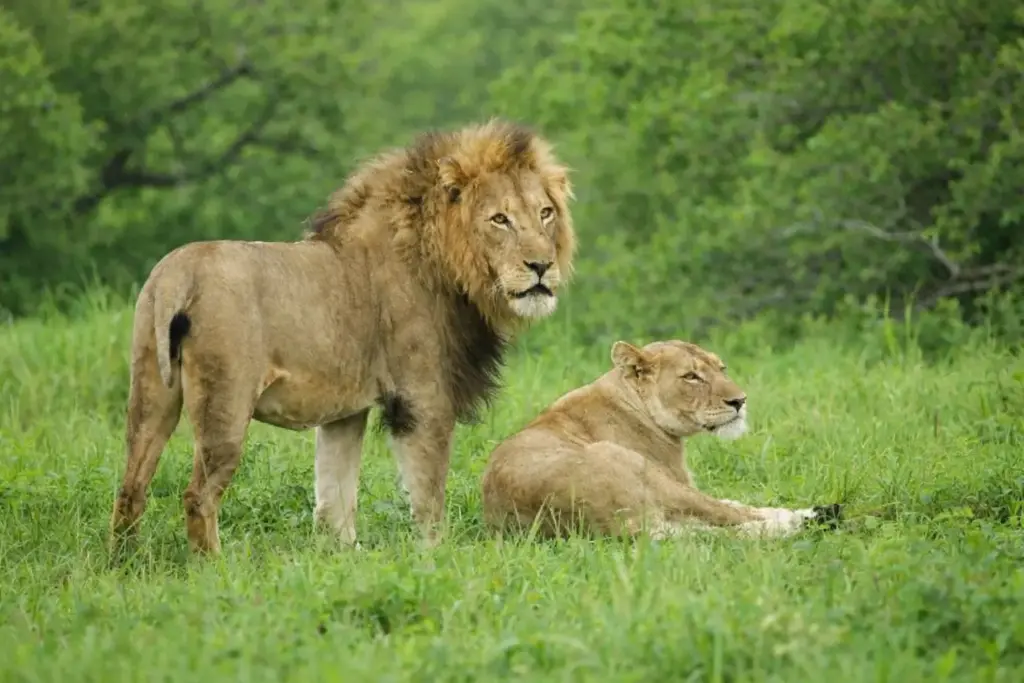
The African lion is one of the most sought-after animals on a Kruger National Park safari.
🦁 Approximately 1,500 to 1,700 lions live in the park, with particularly high concentrations in the south, where conditions support plentiful prey.
👀 On safari, lions are often seen:
🌿 resting beneath trees during the hottest hours
🦓 stalking herds of herbivores
🌅 walking along the tracks at dawn
🌇 active in the late afternoon
⚠️ Lions spend much of the day resting to conserve energy.
⏰ For this reason, the best times to see them are early morning and late afternoon, when they are more active and your chances of a sighting increase.
🐘 African Elephant: Kruger's Easiest Giant to Spot
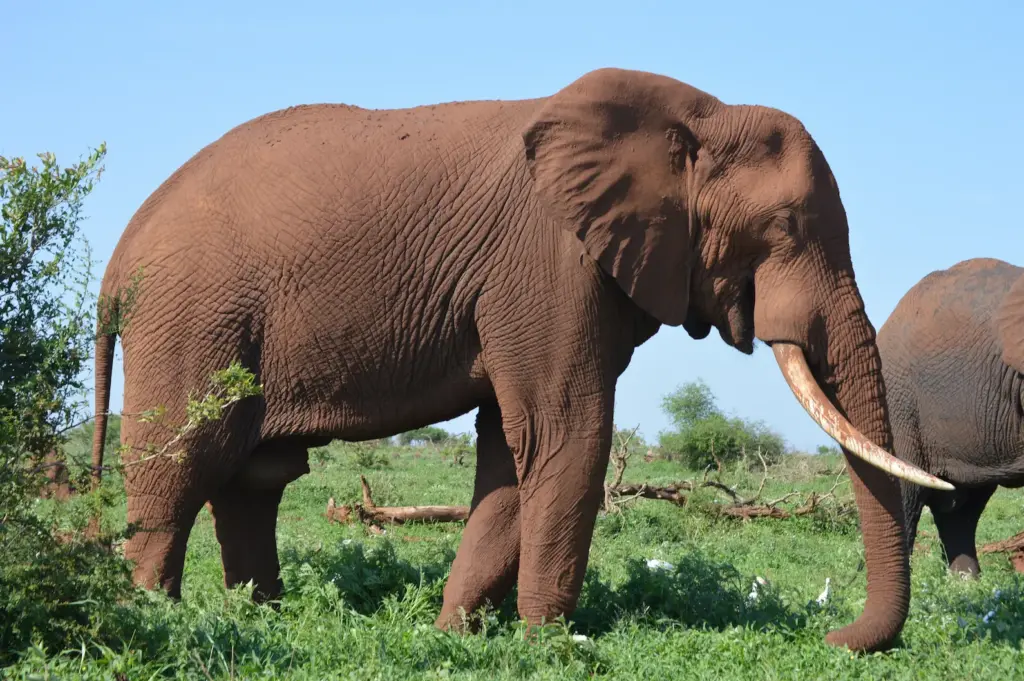
The African elephant is the world's largest land animal and one of the easiest animals to see in Kruger National Park.
🐘 More than 17,000 elephants live in the park, making Kruger one of Africa's best destinations for seeing them in the wild.
👀 On safari, you will often find them:
🌿 feeding on trees and shrubs
🚶 crossing the park's tracks
💧 drinking from rivers or waterholes
👨👩👧 travelling in family groups
🧠 Elephants are exceptionally intelligent and social animals.
The herd is usually led by an adult female who guides the group in search of food and water.
📸 For many travellers, their first close encounter with a wild elephant is one of the most powerful moments of the entire safari.
🐆 Leopard: The Most Elusive Big Cat in Kruger National Park
The leopard is one of the hardest animals to spot in Kruger National Park, but also one of the most fascinating.
🐆 Unlike lions, leopards are solitary, stealthy and extremely elusive animals.
🌿 They spend much of the day resting in trees or hidden among the vegetation, making them more difficult to spot.
📊 Kruger National Park, however, supports one of Africa's most important leopard populations, increasing your chances of seeing one on safari.
📍 The areas where they are most frequently seen include:
• Lower Sabie
• Skukuza
• Crocodile Bridge
• Satara
✨ When a leopard appears on safari, it often becomes one of the most memorable moments of the trip.
Its elegance, movement and stealth make it one of the most spectacular animals in African wildlife.
🦏 More Animals in Kruger National Park: What Wildlife Can You See on Safari?
Beyond the Big Five, Kruger National Park has an enormous diversity of species that makes every safari completely different.
🌍 Many travellers arrive hoping to see lions, elephants or leopards, but Kruger's ecosystem is far broader, more complex and more fascinating.
👀 On a multi-day safari, you will very often see:
🦒 large savannah herbivores
🐃 herds of animals roaming free
🐆 lesser-known predators
🐊 impressive reptiles
🦅 spectacular African birds
🌿 This biodiversity makes Kruger one of the world's best parks for seeing wildlife in its natural habitat.
🔄 Every safari is different because animals are constantly moving in search of food, water and safety.
🐃 African Buffalo: One of Kruger's Most Dangerous Animals
The African buffalo is one of Kruger National Park's most imposing and underestimated animals.
🐃 Although often overshadowed by more popular species, it plays a key role in the balance of the ecosystem.
👀 These animals usually travel in large herds that may number more than 200 individuals.
They are often seen:
🌿 near rivers or water sources
🌾 grazing on open plains
🐃 moving in large groups
⚠️ Despite its calm appearance, the African buffalo is considered one of Africa's most dangerous animals.
💥 Its strength, stamina and defensive behaviour make it a formidable opponent even for predators such as lions.
🎬 In Kruger, it is not unusual to witness a buffalo herd confronting a pride of lions to protect one of its members.
🌍 These interactions are part of the park's natural balance and can be among the most dramatic moments of a safari.
🦏 Rhino: One of Kruger National Park's Most Protected Species
The rhinoceros is one of Kruger National Park's most iconic animals and one of its most important species for conservation.
🦏 Two main species can be found in the park:
• white rhinoceros
• black rhinoceros
👀 The white rhino is more common and can be seen relatively often on safari.
It is commonly found in:
🌾 open savannah
🌿 areas of low vegetation
💧 areas near water
🧘 Despite its considerable size, the white rhino is generally calm by nature.
🌿 The black rhino, by contrast, is much rarer and harder to see. It prefers dense vegetation and is more solitary and reserved.
🌍 Rhino conservation is one of Africa's greatest challenges, and Kruger National Park plays a vital role in protecting the species.
✨ For many travellers, seeing a rhino in the wild is one of the most special and unforgettable moments of their safari.
🦒 Giraffes: Among the Easiest Animals to See in Kruger National Park
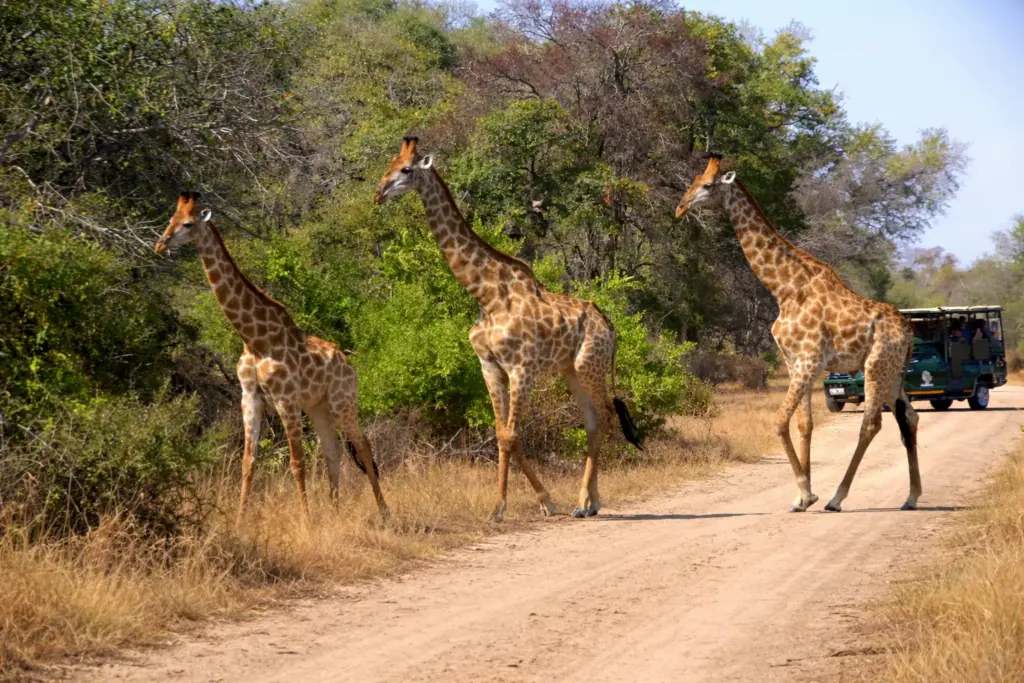
Giraffes are among the most elegant and easiest animals to see during a Kruger National Park safari.
🦒 Their height and calm behaviour make them easy to spot even from a considerable distance.
👀 They are often seen:
🌿 feeding on acacia leaves
🚶 walking slowly across the savannah
👨👩👧 moving in small groups
🌅 The silhouette of a giraffe at sunset is one of Africa's most iconic images.
On safari, it is very common to find them crossing the tracks or moving calmly through the vegetation.
🦓 Zebras: Among Kruger's Most Common Animals
Plains zebras are among the most abundant and easiest animals to see in Kruger National Park.
🦓 They usually travel in groups and share their habitat with other herbivores, such as wildebeest and impalas.
🌿 They play a key role in the ecosystem by helping to maintain the balance of the vegetation.
📸 Their unique stripe patterns make them some of the most photogenic animals on safari.
Watching large herds move across the savannah is one of the defining scenes of the African landscape.
🦛 Hippos: Kruger National Park's Semi-Aquatic Giants
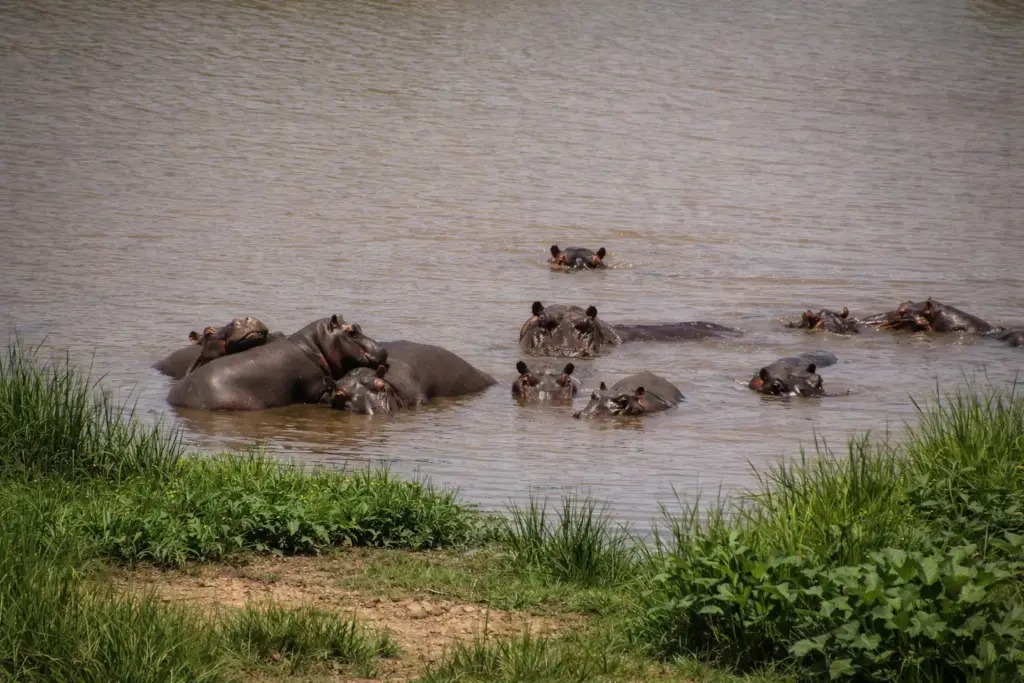
Hippos are among the most intriguing and surprising animals in Kruger National Park.
🦛 They spend most of the day in the water to protect themselves from the heat.
👀 On safari, you will often see them in:
🌊 rivers
💧 dams
🌿 lagoons
📍 Places such as the Sabie River and Crocodile River are ideal for seeing large groups.
⚠️ Although they may appear calm, they are extremely territorial and can be dangerous.
🌙 At night, they leave the water and travel several kilometres to feed.
🐊 Nile Crocodiles: Kruger's Silent Predators
The Nile crocodile is the largest reptile among Kruger National Park's animals.
🐊 They are often seen basking on the banks or floating motionless in the water.
🎯 They are highly efficient predators, capable of remaining motionless for long periods before striking.
📍 They are particularly common in:
🌊 Sabie River
🌊 Crocodile River
💧 the park's dams
🌍 Their presence reflects the natural balance of Kruger's ecosystem.
🦌 African Antelopes: The Foundation of Kruger's Ecosystem
Antelopes are among Kruger National Park's most important animals for the balance of its ecosystem.
🌿 They form the foundation of the food chain for many predators.
The most common include:
🦌 Impala – the most abundant
🦌 Kudu – recognisable by its spiral horns
🦌 Nyala – one of the most elegant
🦌 Waterbuck – associated with water
🦌 Eland – Africa's largest antelope
👀 On safari, it is virtually impossible not to see impalas or kudus.
🐆 Their presence directly influences the behaviour of the park's predators.
🐆 Other Kruger National Park Predators You Can See on Safari
Beyond the Big Five, Kruger National Park is home to other animals notable for their behaviour and hunting strategies.
🐆 cheetahs
🐕 African wild dogs
🐺 spotted hyenas
Although sightings are less frequent, seeing one creates a remarkable moment on safari.
🐆 Cheetah: Kruger's Fastest Animal
The cheetah is one of Kruger National Park's most impressive animals because of its speed.
🐆 It can reach speeds of up to 100 km/h over short distances.
🌿 It prefers open areas where it can use its speed to hunt.
📍 You are more likely to see one in:
🌾 open savannah
🌿 areas with sparse vegetation
⏰ It is usually active:
🌅 in the morning
🌇 at sunset
Seeing a cheetah in the wild is a rare and very special experience.
🐕 African Wild Dog: One of Kruger's Rarest Animals
The African wild dog is one of the hardest animals to see in Kruger National Park.
🐕 It is considered one of Africa's most endangered species.
🎯 Its hunting strategy relies on:
🏃 stamina
👥 coordination
🎯 teamwork
📈 African wild dogs have one of the highest hunting success rates among African predators.
Because they are constantly on the move, sightings are unpredictable but unforgettable.
🐺 Spotted Hyena: Vital to the Balance of the Ecosystem
The hyena is one of Kruger National Park's most misunderstood animals.
🐺 It is not only a scavenger, but also a skilled hunter.
👀 It is often seen:
🌙 at night
🌅 at dawn
🌇 near areas with prey
🌍 It plays a vital role by clearing remains and maintaining the natural balance.
🔊 Its distinctive call is one of the most recognisable sounds of the African savannah.
🦅 Birds of Kruger National Park: More Than 500 Species
Kruger is also a paradise for birdwatching.
🦅 Among Kruger National Park's wildlife, birds stand out for their extraordinary diversity.
📊 More than 500 species inhabit the park.
Some of the most notable include:
🦅 martial eagle
🦅 African fish eagle
🦉 owls
🦜 bee-eaters
🦢 herons and storks
Even if you are not an expert, the variety of colours and behaviours is impressive.
📊 How Many Animals Do You Actually See on a Kruger Safari?
One of the most frequently asked questions is:
🤔 Do you really see animals on safari?
👉 Yes, and in large numbers.
On a two- or three-day safari, you will typically see:
🐘 elephants
🦒 giraffes
🦓 zebras
🦌 impalas
🦛 hippos
🐃 buffalo
🦁 Predators are also seen frequently, although sightings can never be guaranteed.
📈 The longer the safari, the better your chances of seeing them.
📊 To find the right safari for the number of days you have, read our 👉 comparison of one-, two-, three- and four-day safaris in Kruger National Park
🧭 Key Factors for Seeing Animals in Kruger National Park
The presence of animals in Kruger National Park depends on several factors:
🌅 Time of day → more activity at dawn and sunset
🌿 Time of year → the dry season makes sightings easier
🗺 Area of the park → some areas have higher concentrations of wildlife
👣 Guide's experience → a decisive factor
👉 This is why guided safaris significantly improve your chances of a sighting.
🦁 To maximise your chances of seeing wildlife roaming free, explore our 👉 three-day Kruger National Park safari from Maputo
🦁 Experience a Safari in Kruger National Park
Seeing the animals of Kruger National Park in the wild is one of Africa's most impressive experiences.
Every safari is unique and brings unexpected encounters with wildlife.
👉 Plan your trip with these useful articles:
- which Kruger National Park safari to choose from Maputo
- how to get to Kruger from Maputo
- staying inside or outside Kruger National Park
📩 Plan Your Safari from Maputo
To experience an authentic safari in Kruger National Park:
🚙 guided 4×4 safaris
🏨 carefully selected accommodation
📅 one-, two-, three- and four-day itineraries
👉 We design every experience to maximise your chances of seeing wildlife.
🚙 You can also explore our 👉 two-day Kruger National Park safari from Maputo, ideal when you have less time but still want the full safari experience
🌍 Send us a message and we will help you plan an unforgettable safari in Africa.